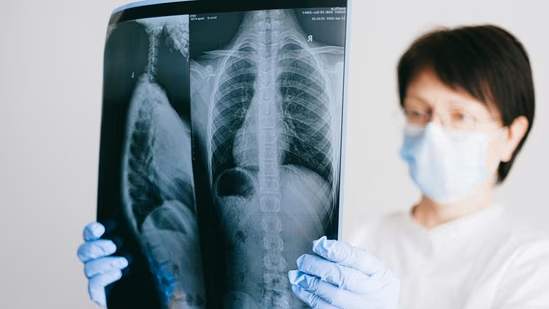
Lung cancer remains one of the leading causes of cancer-related deaths globally and in India, yet the narrative surrounding it is littered with myths and misconceptions. Public perception has long framed it as a disease only affecting smokers, with people often ignoring symptoms until it’s too late.
Also Read | Clinical psychologist explains how formal mental health support can become an integral part of cancer care in India
However, doctors are witnessing a changing landscape – one influenced not just by tobacco use, but also by air pollution, indoor air quality, second-hand smoke, and occupational exposure. At the same time, advances in diagnostics and treatment mean outcomes are no longer as bleak as many believe – particularly when the disease is detected early.
To honour World Cancer Day 2026, HT Lifestyle reached out to Dr GVK Reddy, a medical and haemato-oncologist, and the director of oncology services at Yashoda Hospital, Hyderabad, to gain expert insights on this matter.
He highlights, “One of the biggest challenges we face is not just diagnosing lung cancer but correcting the myths surrounding it. Many people still believe lung cancer only affects smokers, that symptoms can be ignored, or that there are few treatment options. In reality, we are diagnosing more non-smokers today, especially in urban settings, and we have far more treatment tools at our disposal than even a decade ago . Early evaluation of symptoms and timely diagnosis can significantly improve both survival and quality of life.”
The oncologist unpacks five common misconceptions about lung cancer:
Myth 1: Only smokers get lung cancer
Dr Reddy highlights that while smoking remains the single largest risk factor, lung cancer is increasingly being diagnosed among non-smokers, especially those living in urban areas witnessing rising air pollution rates.
He states, “The International Agency for Research on Cancer classifies outdoor air pollution as a carcinogen, and researchshows that in Asia, nearly 60 to 80 percent of lung cancer cases among women occur in those who have never smoked.”
Doctors across India’s major metro cities are reporting a worrying rise in lung cancer diagnoses among women and adults with no history of tobacco use – proving the growing role of long-term exposure to polluted air and particulate matter, as well as second-hand smoke and indoor pollutants, in driving risk beyond smoking alone.
Myth 2: Lung cancer always means poor survival rate or death
The oncologist stresses that a cancer diagnosis does not equate to a death sentence. Modern treatment procedures are increasingly targeting personalised care tailored to the patient profile, which ensures longer, fuller lives than previously possible for survivors.
Dr Reddy explains, “Outcomes vary widely depending on stage at diagnosis, tumour type and molecular profile. However, advances in imaging, pathology and molecular testing have transformed lung cancer care.”
Myth 3: A persistent cough is the only symptom of lung cancer
Dr Reddy states that while chronic cough is a common warning sign, lung cancer symptoms can be far more varied and subtle, especially in early stages. He highlights, “Breathlessness, chest pain, unexplained fatigue, hoarseness of voice, weight loss or repeated respiratory infections may all signal a problem. In polluted cities, these symptoms are often dismissed as routine, delaying diagnosis. Doctors advise seeking medical evaluation if symptoms persist or worsen, as early detection significantly broadens treatment options and improves outcomes.”
Myth 4: All lung cancers are the same
The oncologist points out that lung cancers have two main types – small cell and non-small cell – along with several other subtypes, hence grouping them under a single category is misleading. This also means that the treatment procedure is different for each type.
Dr Reddy explains, “Treatment today depends on tumour biology, making biomarker and molecular testing essential. Identifying these differences allows doctors to customise therapy, including targeted advanced therapies and immunotherapy, leading to better outcomes when diagnosed early.”
Myth 5: Lung cancer only affects older men
According to the oncologist, while lung cancer has historically been more common in older men, doctors across Indian cities are increasingly witnessing lung cancer in women and younger adults, including non-smokers.
He explains, “Rising exposure to other causes like air pollution, passive smoking, etc., has broadened the risk profile, making vigilance important regardless of age or gender. Early evaluation of symptoms allows access to a wider range of treatment options and improves results.”
Dr Reddy concludes, “Lung cancer is no longer a disease defined by a single habit or exposure. In India’s cities, it is shaped by environmental exposure, lifestyle, and how quickly symptoms are taken seriously. Busting these myths is essential – not just to reduce stigma, but to encourage timely diagnosis and informed treatment decisions.”
Note to readers: This article is for informational purposes only and not a substitute for professional medical advice. Always seek the advice of your doctor with any questions about a medical condition.