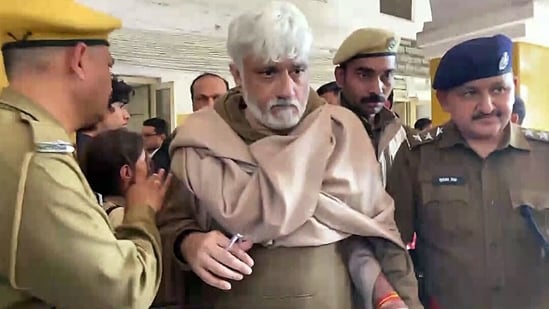
Filmmaker Vikram Bhatt and his wife Shwetambari Bhatt were dealt a blow by the Rajasthan High Court on Saturday, after it rejected their bail applications in a cheating case. The two have been in jail since December 7, when they were arrested in Mumbai and brought to Udaipur.
Vikram Bhatt, wife denied bail
While rejecting their bail, Justice Vinod Kumar Bharwani observed that granting bail to the accused at this stage would not be appropriate.
The Special Public Prosecutor (SPP) had opposed their bail, arguing that the investigation in the case and the accused, including the Bhatts, will be required for further interrogation. The SPP also said that if the applicants are released on bail at this stage, they may influence witnesses.
What is the case?
Vikram Bhatt was arrested in December after Indira IVF and Fertility Centre founder Ajay Murdia, a resident of Udaipur, filed a complaint of cheating and criminal breach of trust against the filmmaker, his wife Shwetambari Bhatt and others, alleging that funds taken in the name of a film project were misappropriated. The complaint has alleged that funds to the tune of ₹30 crore were misappropriated.
The complaint alleged that the Bhatts prepared fake bills under various names and got money transferred from the complainant. The money was supposed to be for making films for the complainant, but was allegedly deposited into the accused’s own accounts and used by them.
Apart from Vikram and his wife, Udaipur-based Dinesh Kataria and Bhatt’s manager, Mehboob Ansari, were also arrested by the Rajasthan Police on December 7.
Vikram Bhatt’s legal team has denied all allegations. According to ANI, Bhatt’s lawyer Kamlesh Dave had alleged that the entire police action was taken “based only on the FIR and not documents”.
“Every payment was made in the knowledge of both parties. There were no such fake or bogus bills. The agreement was done to make two films first and another two on rolling finance,” he had claimed.
Earlier, the court had rejected a petition from Vikram Bhatt seeking the quashing of the FIR, contending that the dispute was of a civil nature, not criminal. But the court noted that since the case also involved misappropriation of funds apart from breach of trust, therefore, the police investigation will continue.