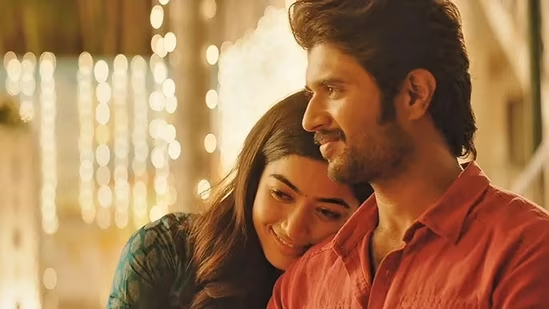
Following a morning ceremony steeped in Telugu traditions, actors Rashmika Mandanna and Vijay Deverakonda chose to celebrate the second leg of their wedding on February 26 by honouring Rashmika’s heritage with a traditional Kodava wedding. Also read | Rashmika Mandanna, Vijay Deverakonda wedding live updates: Actors are now married, get teary eyed during rituals
While the morning belonged to the groom’s culture, the afternoon and evening shifted to the lush wedding traditions of Coorg (Kodagu). Distinct from typical Hindu ceremonies, a Kodava wedding is a unique cultural experience centred around ancestors, nature, and community rather than Vedic rituals or a priest.
The preparation: Oorkuduvo
As per Kodavaclan.com’s blog, the festivities begin with the Oorkuduvo, where both families gather to prepare the wedding venue. This involves the ritualistic cutting of vegetables and pork — a staple of Kodava feasts — and the construction of the five-legged pandhaal (pendal). Interestingly, one pillar of this structure must come from a ‘milk-producing tree’, topped with jackfruit leaves and adorned with mango leaf swags. This structure remains standing for several days following the nuptials as a symbol of the new union.
Wedding attire of Coorgi ceremony
The couple look striking in traditional Coorgi garb: the groom dons a white kupya (a long tunic-style coat), cinched with a red-and-gold silk chele (waistband). He carries the peeche kathi (traditional dagger) and wears a peta (turban). The bride wears a vibrant silk saree, draped in the famous Kodava style — pleats tucked at the back and the vastra (headscarf) elegantly tied at the nape of her neck.
Key rituals: From bales to baale kethuvadh
The ceremony features several deeply symbolic rituals that define the warrior-tribe heritage of the Kodavas:
1. Before the main event, the groom undergoes a ritual shave where milk is applied to his face using blades of grass. Following this, he is given a ritual bath by his mother and two married women, symbolising purification.
2. The bride participates in the bale iduva, where a traditional bangle seller places coloured glass bangles on her wrists. Per custom, at least one pair of black bangles is included to ward off the evil eye.
3. In one of the most spirited displays of the day, the maternal uncles of the couple perform the baale kethuvadh. This involves cutting through nine banana stems with a single stroke of the odikathi (warrior knife), followed by a joyful dance to the beats of the valaga (traditional music).
The main wedding ceremony
The core of the wedding, the dampathi muhurtha, takes place on a decorated dais. Unlike most Indian weddings, there is no agni (fire) or pheras. Instead the couple sit on mukkalis (three-legged stools). Elders and family members shower them with rice and blessings. The groom offers his bride a sip of milk and presents her with cheela pana (a bag of coins). The ceremony concludes with the exchange of garlands and the groom helping his bride to her feet.
The final rituals
The celebration isn’t without a bit of drama and humour. During the batte thadpo, the bride’s cousin playfully blocks the couple’s path, jokingly claiming the groom should have married her. They can pass only after the groom’s side offers a gold coin as a guarantee of her well-being.
The day concludes with the Ganga pooje (Neer Edpo). The bride carries pots of water from a well while balancing on a thombuda (head-rest), taking small, rhythmic steps as the groom’s family dance around her. This symbolises her integration into her new household and her strength in managing her future responsibilities.The double-ceremony day ends with the kombarek kootuvo, where the groom officially welcomes the bride to their private quarters, gifts her a gold wedding band, and the two seek final blessings as a wedded couple.
Note to readers: This report is based on user-generated content. HT.com has not independently verified the claims and does not endorse them.
This article is for informational purposes only.