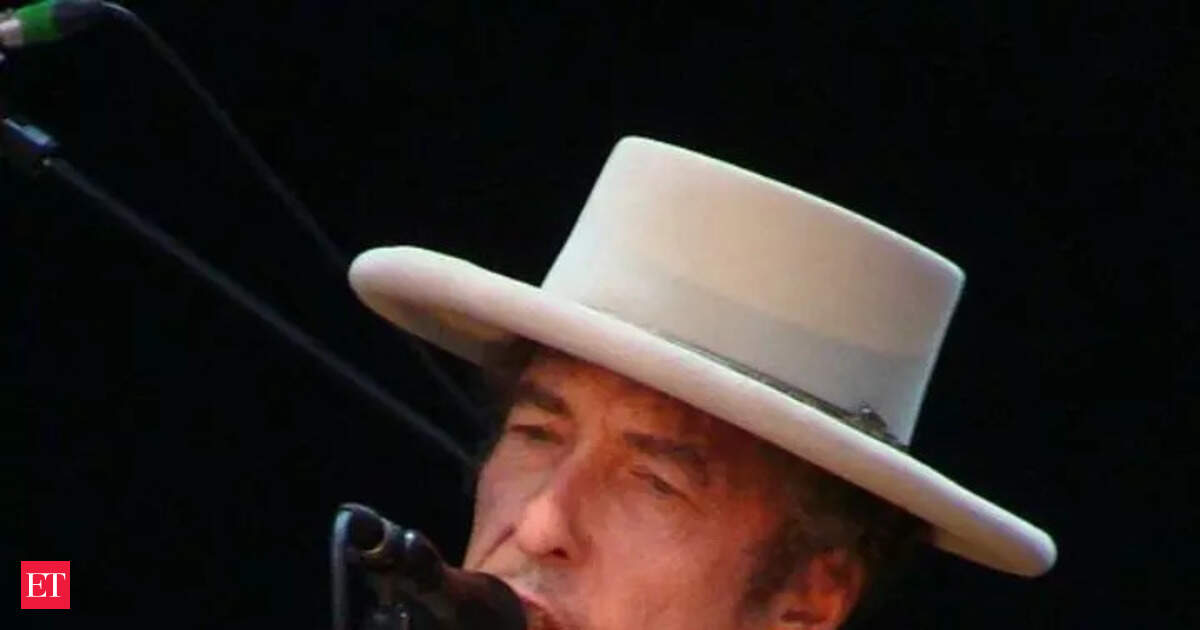
A quote of the day matters because certain words demand reflection. They hold up a mirror. Dylan’s observation feels timeless precisely because it speaks to everyday compromise, those quiet decisions where comfort outweighs conviction. In a world shaped by public declarations and private contradictions, the quote lingers.
Quote of the Day Today February 23
The Quote of the Day today by Bob Dylan is:
“People seldom do what they believe in. They do what is convenient, then repent.”
Bob Dylan was born Robert Allen Zimmerman on May 24, 1941, in Duluth, Minnesota. He grew up in the mining town of Hibbing, where his father co-owned Zimmerman Furniture and Appliance Co. As a teenager, he was drawn to the music of Hank Williams, Little Richard, Elvis Presley, and Johnny Ray. He picked up his first guitar at 14 and played in a series of rock and roll bands while still in high school.
Before enrolling at the University of Minnesota in 1959, he briefly played piano for pop singer Bobby Vee. In Minneapolis, Dylan discovered Dinkytown’s bohemian culture. Influenced by Beat poetry and the folk music of Woody Guthrie, he began performing in coffeehouses and adopted the surname Dylan, inspired by Welsh poet Dylan Thomas. Determined to meet Guthrie, he moved east in 1961 and arrived in New York City during a bitter winter.
Arrival in Greenwich Village
In Greenwich Village, Dylan survived on the generosity of supporters who admired his performances at Gerde’s Folk City. Within months, he was playing harmonica on a Harry Belafonte recording session. A favorable New York Times review by Robert Shelton caught the attention of producer John Hammond, who signed him to Columbia Records. His debut album in 1962 received mixed reactions, but his second release, The Freewheelin’ Bob Dylan (1963), changed everything, as per information sourced from Britannica.
“Blowin’ in the Wind” became a defining anthem of the era, later reaching number two on the charts when recorded by Peter, Paul and Mary. Dylan was soon perceived as a protest voice of a generation. Albums such as The Times They Are A-Changin’ (1964) cemented his place at the forefront of folk music.
The Electric Turn and Artistic Reinvention
Dylan’s career took a dramatic turn in 1965 with Bringing It All Back Home and the electric sound of “Like a Rolling Stone.” His performance at the Newport Folk Festival that year sparked controversy, as he embraced rock instrumentation. Albums like Highway 61 Revisited (1965) and Blonde on Blonde (1966) confirmed his bold reinvention.
After a 1966 motorcycle accident, Dylan retreated from public life before returning with John Wesley Harding (1968) and Nashville Skyline (1969). Through the 1970s and beyond, he continued to evolve, releasing albums including Blood on the Tracks (1975), Desire (1976), Time Out of Mind (1997), and Rough and Rowdy Ways (2020).
Dylan’s achievements extend far beyond commercial success. He sold tens of millions of albums, wrote more than 500 songs recorded by over 2,000 artists, and performed worldwide. His honors include multiple Grammy Awards, an Academy Award, a Golden Globe, the Presidential Medal of Freedom (2012), and the Nobel Prize for Literature (2016), awarded for “having created new poetic expressions within the great American song tradition.” He also received a special Pulitzer Prize citation and numerous lifetime achievement honors, as per information sourced from Britannica.
Meaning of the Quote of the Day
“People seldom do what they believe in. They do what is convenient, then repent.”
The line reflects Dylan’s long-standing interest in moral tension. At its heart, the quote speaks about the gap between ideals and action. Belief requires courage; convenience requires nothing. Many people know what they value, yet choose the easier route—whether out of fear, habit, or social pressure. Repentance follows not because they lacked awareness, but because they ignored it.
Dylan’s career mirrors this tension in a different way. He repeatedly rejected what was expected of him—walking away from television appearances, challenging folk purists, converting to Christianity in 1979, and constantly shifting direction. While audiences and critics tried to define him, he moved according to his own instincts. In that sense, his life often contradicted the convenience of staying put.
The quote also suggests that regret is predictable when action does not align with conviction. It is not framed as outrage, but as observation. Dylan does not accuse; he describes. The power of the line lies in its simplicity. It invites self-examination without preaching.