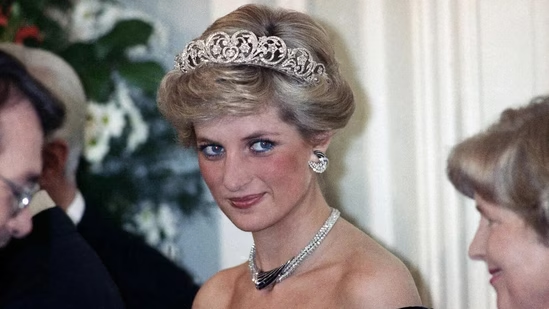
In an era often defined by rapid technological advancement and global upheaval, the words of late Diana Frances Spencer continue to resonate with a profound relevance. Decades after she first spoke them, her observations on the human condition remain a cornerstone for those advocating for mental health and empathy. Also read | Quote of the day by Aishwarya Rai: ‘I think the biggest strength lies in one’s ability to say no’
A different kind of healing
During her 1995 interview with Martin Bashir for BBC’s Panorama, Princess Diana or ‘the People’s Princess‘, as she was fondly called, moved beyond the royal veneer to address what she viewed as a silent, global epidemic. While the world focused on political shifts and economic indices, Diana turned the spotlight toward the emotional poverty she witnessed during her extensive charity work.
From visiting landmine victims to holding the hands of patients in AIDS wards — at a time when such physical contact was unfairly stigmatised — her approach was rooted in a simple philosophy: the power of presence.
She said, “I think the biggest disease this world suffers from in this day and age is the disease of people feeling unloved, and I know that I can give love for a minute, for half an hour, for a day, for a month, but I can give — I’m very happy to do that and I want to do that.”
The modern echo
Today, experts in sociology and psychology often mirror the Princess Diana’s sentiments, citing ‘the loneliness epidemic’ as one of the primary drivers of modern health crises. Diana’s ability to articulate this void helped pave the way for a more open dialogue regarding emotional well-being and the importance of community support.
Her legacy suggests that while medicine can cure physical ailments, the remedy for the ‘disease of feeling unloved’ requires a more personal currency: time and genuine affection. As we reflect on her words today, they serve as a gentle but firm reminder that in a world of constant connection, the deepest human need remains to be truly loved.
Can loving relationships cure for the invisible ailment?
In a 2025 interview with HT Lifestyle, Esha Bhardwaj, a wellness coach and therapist, explained how relationships can shape our emotional and mental health. She said, “The way we feel about ourselves, the strength of our emotional resilience, and the level of self-respect we carry are all deeply influenced by the relationships we live within.”
Esha further said: “When we are surrounded by people who respect our emotions, validate our experiences, and treat us with kindness, our inner world becomes calmer. We begin to believe, at a subconscious level, that we matter. That we are lovable, worthy, and safe. These aren’t just feel-good thoughts—they become the bedrock of strong mental health.”
More about Prince Diana
Princess Diana, born Diana Frances Spencer on July 1 1961, was once a member of the British royal family. She became the Princess of Wales after marrying Prince Charles (now King Charles III) in 1981 and was known for her charitable work, , especially with HIV/AIDS patients, land‑mine victims and mental‑health advocacy. She died in a car accident in Paris on August 31 1997, at the age of 36. Princess Diana’s two sons are Prince William and Prince Harry, both of whom have carried on her legacy in their own ways.
Note to readers: This article is for informational purposes only and not a substitute for professional medical advice. Always seek the advice of your doctor with any questions about a medical condition.