Have you ever wondered how dirty the money in your wallet is? Well, you may be surprised to know the answer. Every time you pay for your bills with cash or receive change from a shop, it is best to wash your hands with soap before you touch your face, mouth, or nose, or sit down to eat, because a growing body of research suggests that cash is filthy.
Also Read | Woman lost 9 kg in 3 months without obsessing over protein: Here are 5 things she focused on instead
In a December 2025 Instagram video, microbiologist Dr Shweta, MBBS, MD, demonstrated that the money in your wallet likely harbours innumerable fungi and bacteria. She shared the clip with the caption, “Think you only carry money?? WATCH THIS.”
Your money is dirtier than you think
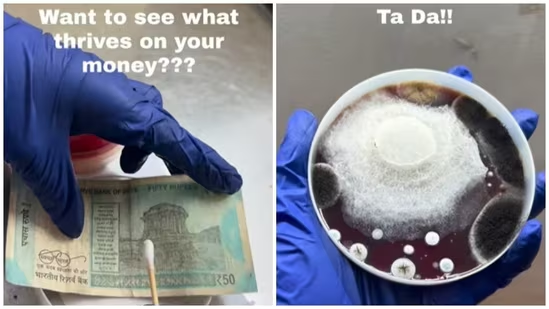
The video shows Dr Shweta taking a ‘normal’ 50-rupee note and rubbing it with a sterile swab to inoculate it onto culture agar media. She asks her viewers, “Want to see what thrives on your money?” According to the microbiologist, the culture results astonished her.
As per the microbiologist, after taking the sample with a sterile swab from a ₹50 note, she rubbed the same swab on the culture media in a biosafety cabinet. After incubation, multiple colonies of fungus were observed growing in the culture, as shown in the clip.
“Not just any fungus, but fungus which causes infections,” Dr Shweta revealed, adding that she and her team even identified the fungus. “These are the spores which are inhaled by humans: Mucor species, Aspergillus niger,” she added.
Lastly, the microbiologist cautioned, “Avoid touching nose, eyes, and mouth after making contact with notes.”
Why does fungus grow on the notes?
According to Dr Shweta, “Fungus needs moisture and organic matter. As rupee notes pass through thousands of hands, it’s possible for such notes to carry fungal spores, especially when Fungus thrives on dirt, oil, and sweat. Humidity in India is another additional factor for its growth.”
Further explaining, why it can be dangerous, she added, “These spores spread easily from hands to eyes, nose, mouth and have been known to cause infections such as ear infections, allergic infections, sinusitis and in immunocompromised patients, such as severe diabetic and cancer patients, can cause serious respiratory, central nervous system, kidney, and skin infections.”
Note to readers: This article is for informational purposes only and not a substitute for professional medical advice. Always seek the advice of your doctor with any questions about a medical condition.
This report is based on user-generated content from social media. HT.com has not independently verified the claims and does not endorse them.