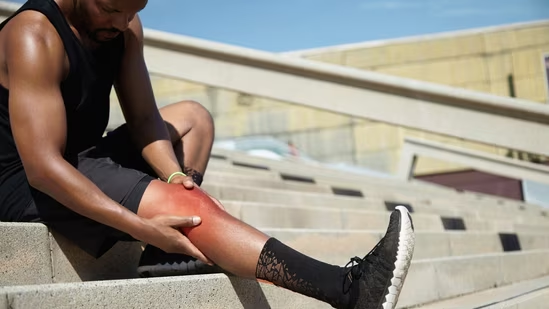
Ever played and hurt yourself, expecting it to heal on its own? You may be in the dark. This can be anything from a pulled muscle to a twisted ankle. But simply dismissing it as a sprain that will fix itself is not a good idea. Usually, mild injuries heal by themselves with rest, but it is flawed to assume that all injuries are mild, as some can be serious as well. The most important thing is to understand when your injury may need medical attention. By being aware of certain warning signs, you can identify if your sprain or strain needs medical examination.
ALSO READ: Pain in knees when you walk? Cult Fit founder shares 5 exercises to strengthen joints
HT Lifestyle reached out to Dr Kundan Kumar Jha, consultant-sports injuries and joint replacement surgeon at Arete Hospitals, who shared the key signs.
Sharing his clinical experience, he elaborated, “Sprains and strains are easy to dismiss. Most people assume they only happen during sports, but in practice, I see them after very ordinary moments, carrying groceries, stepping off a curb awkwardly, lifting a suitcase, or slipping on wet stairs. Because they’re so common, many people try to manage the pain on their own. Sometimes that’s fine. Sometimes it’s not.”
Dr Jha listed out the signs that may indicate your strain is serious:
1. Pain isn’t settling
- Mild injury starts to feel better within a few days.
- If pain is the same or worsens, then it is a sign of something serious.
- Pain keeps returning once you move the area.
2. Swelling that refuses to go down
- Swelling after injury is normal, but ideally, it should go down over time.
- If it’s still puffy after a few days or swells up again when you move it, that usually means it’s not healing properly.
3. You are avoiding using that arm or leg
- Many people don’t realise they’re doing this. They limp slightly, stop lifting with one arm, or change how they move.
- Difficulty standing, walking, gripping, or carrying weight usually means the injury is more than minor.
4. Joint doesn’t feel reliable
- If your knee, ankle, shoulder, or wrist feels like it might give way, don’t ignore it.
- Most of the time, it means the ligaments are hurt, or the muscles around it aren’t supporting it properly.
5. Sharp pain, numbness, or limited movement
- Pain that was sharp right from the start, visible changes in shape, tingling, numbness, or trouble moving the joint normally should always be assessed by a doctor.
- These symptoms suggest more than a simple strain.
6. Same injury keeps coming back
- If you keep hurting the same spot again and again, it usually shows that the first injury never really got better.
- The muscles around it aren’t strong enough, so the joint just stays at risk.
The surgeon urged getting the injury checked early to understand how serious it is. “With some rest, maybe physiotherapy, or using a brace, most people get better and don’t end up with stiffness or weak joints,” Dr Kundan Kumar Jha noted.
So while sprains and strains are common, Dr Jha mentioned that ongoing pain and instability should not be considered normal. He also recommended getting an examination done by a sports injury surgeon, followed by an MRI scan.
Note to readers: This article is for informational purposes only and not a substitute for professional medical advice. Always seek the advice of your doctor with any questions about a medical condition.