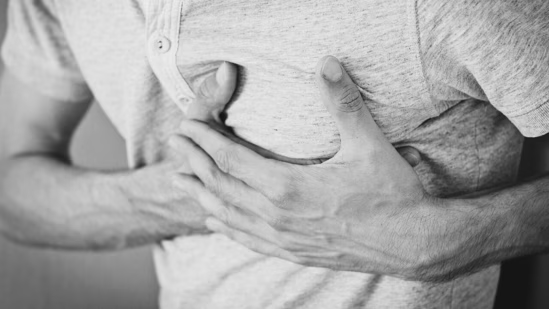
Chest pain is one symptom most people panic about, and often for good reason. But in that moment of fear, many end up doing the exact opposite of what their body needs. From brushing it off as “gas” to popping random pills or waiting it out at home, these common mistakes can delay treatment and turn a manageable situation into a medical emergency.
Dr Priyanka Sehrawat, general physician and neurologist, The Neuromed Clinic, Gurugram, shares in her January 27 Instagram post the critical missteps people make when chest pain strikes and why acting smart, not fast, can save lives. (Also read: Ghaziabad sisters’ suicide raises alarm over digital addiction: AIIMS-trained neurologist explains impact on young minds )
What can a heart scan reveal about your heart’s health
When people experience chest pain or a feeling of heaviness, many rush to get an ECHO (echocardiography, an ultrasound test that shows the heart’s structure and function) done without fully understanding what the test can and cannot detect. According to Dr Priyanka, echocardiography is useful, but it has its limitations.
“An ECHO tells us about the structure of the heart, the ejection fraction, and how effectively the heart is pumping oxygenated blood to the body,” says Dr Sehrawat. “It also helps identify valve-related problems or whether there has been a previous heart attack that has caused a part of the heart muscle to stop functioning properly.”
Can a heart scan predict a heart attack
However, she stresses that an ECHO cannot predict an impending heart attack. “A heart attack happens because of a mismatch between supply and demand,” Dr Sehrawat explains. “The heart muscle needs oxygen to work. When the oxygen supply to the heart muscle reduces and, at the same time, the demand increases, this imbalance leads to a heart attack.”
To detect this critical supply–demand mismatch, other tests are more effective. “This mismatch can be picked up through an ECG or a treadmill test,” she says. “A treadmill test works by increasing the heart’s demand. As you exercise, the heart has to work harder, and the test helps us see whether the oxygen supply is able to keep up with that increased demand or not.”
Dr Sehrawat adds that understanding the role of each cardiac test can help patients avoid unnecessary panic and ensure timely, appropriate diagnosis.
Note to readers: This article is for informational purposes only and not a substitute for professional medical advice. Always seek the advice of your doctor with any questions about a medical condition.
This report is based on user-generated content from social media. HT.com has not independently verified the claims and does not endorse them.