On paper, almost every conversation around weight loss eventually circles back to watching what you eat. To do so, you need to carefully plan your meals; after all, what you put on your plate has a direct and measurable impact on the results you see. The foods you choose can make or break all your efforts.
ALSO READ: Fitness coach shares 4 foods to avoid if you are in a calorie deficit and want to reduce belly fat
Calorie deficit is at the very core of the process, so that you can burn more calories than what you are consuming. For that, you need to plan, and not just whimsically, but strategically, incorporating the non-negotiable bare minimum rules like adequate protein, balanced portion, controlled fats.
But this is where most people stumble, actually planning the meals. Theoretically, it may sound doable, but in practice, the struggle is very real, and execution often falls short. For the first couple of days, motivation is high and sticking to clean eating goals feels manageable. However, as the days go by, the constant planning can start to feel overwhelming.
Add to that the pressure of juggling work responsibilities, a social life and everyday fatigue, meal planning can start become a chore, easily falling from your daily priorities. This is where many begin to slack and give up, as they grudgingly accept it is too much to continue and sustain.
This means you need to simplify how you approach meal prep. Having a ready set of healthy, balanced recipes across breakfast, lunch, dinner and snacks can make all the difference. When you know what to eat and in what quantity, you can get ahead of decision fatigue. By rotating a fixed set of meals, eating well becomes easier and less stressful, so that you can achieve your fitness goals.
Fitness trainer Sunil Shetty addressed the common challenge of meal prep and shared a list of easy, sustainable meals on his Instagram. According to him, sticking to the same foods in the same quantities eliminates confusion and helps to make fat loss more predictable. By focusing on consistency rather than variety, you can make clean, healthy eating sustainable.
Sunil listed out options for breakfast, lunch, dinner, snacks:
Breakfast options
(~35–45g protein)
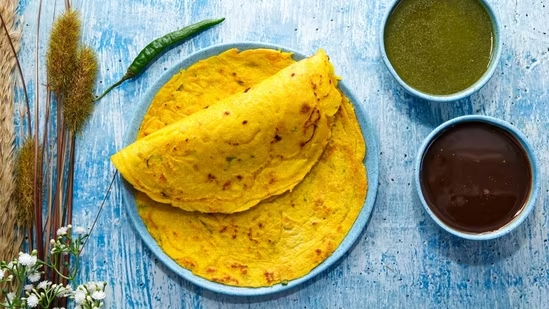
1. Moong dal chilla
Soaked moong dal 80g (raw weight)
Paneer stuffing 80g
Oil 1 tsp
Curd 100g
2. Vegetable omelette plate
Whole eggs 2
Egg whites 4
Whole wheat bread 2 slices
Oil 1 tsp
3. Protein oats
Oats 60g
Low-fat milk or water
Whey protein 1 scoop
Peanut butter 1 tbsp
4. Paneer bhurji plate
Low-fat paneer 150g
Mixed veggies
2 small rotis
Oil 1 tsp
5. Sprouts bowl
Mixed sprouts 200g (boiled)
Curd 150g
Seeds 1 tbsp
One fruit
Lunch options
(~40–50g protein)
- Dal rice thali
Cooked dal 200g
Cooked rice 150g
Curd 100g
Big salad
Ghee/oil 1 tsp
2. Chicken roti plate
Grilled chicken breast 180g
2 whole wheat rotis
Veg sabzi
Oil 1 tsp
3. Paneer roti meal
Low-fat paneer 180g
2 rotis
Veg sabzi
Oil 1 tsp
4. Rajma rice bowl
Cooked rajma 200g
Cooked rice 120g
Curd 100g
5. Egg curry meal
Whole eggs 3 + whites 3
2 rotis
Veg sabzi
Oil 1 tsp
Dinner options
(~40–45g protein)
1. Vegetable khichdi plate
Moong dal 60g (raw)
Rice 40g (raw)
Curd 150g
2. Paneer veggie stir fry
Low-fat paneer 200g
Lots of vegetables
Oil 1 tsp
3. Egg bhurji bowl
Whole eggs 2
Egg whites 4
1 roti
Salad
4. Chicken curry bowl
Chicken breast 180g
Veggies
1 small roti
Oil 1 tsp
5. Dalia protein bowl
Dalia 70g (raw)
Curd 200g
Paneer cubes 80g
Snack swaps
(~200–250 calories)
Whey protein shake + fruit
Boiled eggs 3
Roasted chana 50g
Curd 200g + seeds
Note to readers: This article is for informational purposes only and not a substitute for professional medical advice. Always seek the advice of your doctor with any questions about a medical condition.