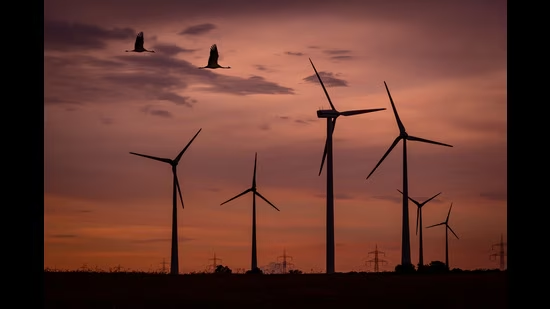
We’ve studied birds for centuries, but few have focused on skies as a habitat, and even those have done so sporadically (during storms or in the aftermath of volcanoes, for instance).Then, in 2008, an American bat biologist definitively flipped the perspective, urging scientists to study the aerosphere and its impact as a complex ecosystem teeming with life.
Built structures such as skyscrapers and wind farms are eating into new areas and new altitudes, posing risks to birds, bats and insects. (Pixabay)
Thomas Kunz’s 2008 paper (published in the journal Integrative and Comparative Biology) coined the term “aeroecology”, and defined it as the study and modelling of the “aerosphere”.This is a field of study that sits at the intersection of atmospheric science, ecology and engineering, with research conducted via thermal imaging, radar and other sensors.
Key aims include tracking flying animals to record their responses to wind, atmospheric pressure, sunlight, temperature and gravity; and studying the impacts of pollution, shifting climate patterns and built structures.
The air is as much a habitat for animals as is a forest or a stream, says Robert Diehl, research ecologist at the US Geological Survey Northern Rocky Mountain Science Center. “This recognition allows biologists to apply habitat-related principles to the airspace that will ultimately inform species conservation measures.”
Built structures alone, for instance, are changing and eating into new areas and new altitudes. Buildings are getting taller, power lines are shifting, communication towers proliferating, and there are now thousands of square kilometres of wind turbines and solar panels.
Studies in this field examine how such changes influence fatalities, adjust migration routes, affect feeding and breeding patterns, and alter patterns of activity, particularly at night.
Eventually, the aim is to have a body of data on factors as detailed as how rising temperatures affect energy depletion during flight (heat makes air less dense, so bird wings generate less upward force during flaps).
Advances in technology are crucial to the field, since remote sensing tools, from thermal imaging and bioacoustics to satellite tracking and powerful radar systems, are needed to peer into a largely unknown airspace. “The data emerging from these innovative technologies will ultimately drive species conservation decisions,” says Diehl. This could be especially helpful since “it may one day be necessary to protect airspaces from development in the same way we protect land and water spaces.”
Lifestyle -Darshana Tiwari Published: Thursday, January 8, 2026, 0:00 [IST] Cancer Horoscope Today January 08, Thursday: Hey Cancer, today promises to be a journey through […]
Motherhood is one of the sweetest phases in a woman’s life and is widely celebrated. However, after delivery, many women experience physical changes such as […]
Lifestyle -Oneindia Staff Updated: Wednesday, January 7, 2026, 7:17 [IST] Legend Saravanan’s horoscope blends strong Capricorn discipline with the warmth of a family man and […]