Sometime, I wish I could disappear into the souffle-like insouciance of PG Wodehouse, rather than reading up on the leading causes of cancer mortality in people under 50.
The good news is that a new study by the American Cancer Society has found that overall cancer mortality in people under 50 has plummeted; except for one type of cancer, colorectal, which is now the cancer with the highest death toll in that cohort.
Maybe the toll is linked to the American diet and lifestyle, I told myself. But my uneasy calm vanished when I turned to India’s data and discovered that, here too, colorectal cancer incidence is rising rapidly, with 64,863 cases in 2022 and 38,367 deaths. The north-east and cities such as Delhi, Bengaluru and Thiruvananthapuram show up as hotspots.
What is going on? Why are the relatively young dying of this “old-people” disease?
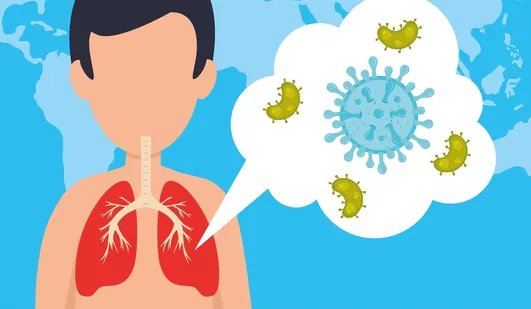
The list of co-morbidities — obesity, diabetes, inflammatory bowel disease (IBD; which is skyrocketing in India) — offers hints, as does the fact that the risk of developing colorectal cancer triples when one has IBD. The fingerprints of the “culprit” are increasingly being spotted at the scene of every chronic, non-infectious disease epidemic and, ironically enough, it is a microbial fingerprint: that of an off-kilter gut biome.
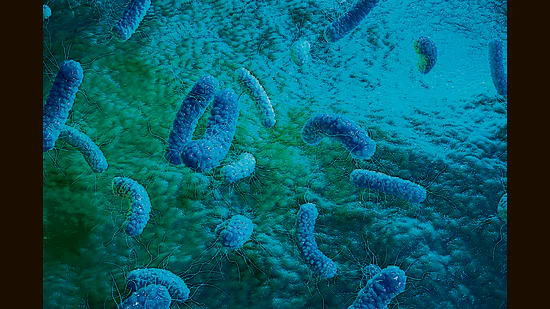
The gut biome is a consortium of microbes (mostly bacteria, with some archaea, viruses, fungi and eukaryotes thrown in) that occupy the gut. This biome evolved alongside us and our diets. (A study that examined the microbial DNA from paleo faeces found entirely new microbial species inside!)
The species mix within the biome varies by age, between vegetarians and omnivores, and the constitution changes by season and even reflects circadian patterns. In short, this vital “organ” is affected by climate, by changes in climate and, as we shall see, influences how we respond to stress, including that from a changing climate.
To delve deeper into that last point, let’s turn to evidence from three landmark experiments.
***
In a now-classic 2004 study, Dr Nobuyuki Sudo and his colleagues at Japan’s Kyushu University found that mice raised without a gut microbiome (“germ-free” or GF mice) mounted an outsized hormonal response when restrained within a small container. Their blood showed surging stress-hormone levels compared with mice with “normal” guts.
The study ruled out any influence of maternal care and rearing conditions, leaving the variance purely to differences in the gut. But this overreaction was selective: when the mice were exposed to ether, both types of mice responded similarly; it was only when higher-order thinking was required to evaluate the seriousness of the threat that stress-hormones levels exploded, suggesting that the microbiome tunes how the brain interprets stressors and regulates response.
The researchers found that the roots of this difference lay in brain biology.
GF mice had lower levels of brain-derived neurotrophic factor (BDNF), a molecule essential for building and maintaining neural connections, especially in regions that shape memory, emotion and stress regulation. The GF mice also expressed fewer glucocorticoid receptors, the receptors that detect stress hormones and provide the “off switch”, telling the brain and pituitary that enough cortisol has been released. In other words, without the microbiome, the stress systems of GF mice were prone to overreact, and slow to shut down.
The killer detail in this classic study came when scientists introduced the “good bacteria” Bifidobacterium infantis into GF mice during a critical developmental window. Now, stress responses in these mice became “normal”. Meanwhile, when GF mice were given, for lack of a better word, “bad bacteria” such as Escherichia coli, their stress response became even more exaggerated. The study showed clearly that gut microbes, and the type of gut microbes, mould how the brain “fires” in response to psychological threat.
***
But how did microbes in the gut “talk” to the brain?
Part of the answer came in a landmark 2011 study, in which Javier Bravo et al showed the role played by the vagus nerve. This nerve, whose name comes from the Latin term for “wandering”, originates in the brain stem, meanders through the neck and thorax, and down to and through the digestive tract, carrying signals of satiety, inflammation and energy metabolism primarily from the gut to the brain. Indeed, over 80% of the fibres from the intestinal wall in the vagus are afferent, meaning that they carry signals to the brain.
“Trust your gut” has a biological basis. Sort of.
In this experiment, scientists fed laboratory mice with either a probiotic (a strain of Lactobacillus rhamnosus) or a plain broth. When exposed to stress, mice given probiotics (PBM) had lower stress-hormone levels in their blood and consistently showed less anxiety- and depression-like behaviour. For instance, when mice were placed in a pool of deep water from which there was no escape, the PBM swam for longer than the broth-fed mice before giving up. In other tests, they were more exploratory and their brains showed critical differences in how stress was biochemically processed.
But the real insight came when the researchers cut the vagus nerve of the mice. The stress-resilience in PBM mice disappeared, indicating that gut microbes had indeed been sending neural signals through the vagus nerve to the brain, rather than merely releasing signals into the bloodstream.
Think of the vagus as the landline listening to the gut and whispering encouragement to the brain. (There’s wifi too, but we’ll get to that another time)
***
What are these bacteria really up to, then, in the gut?
It turns out the gut dispatches far more than nutrition into the body.
It modulates immune (which is why research into autoimmune disorders is now being directed here), hormonal and psychological responses to stressors. The small intestine is the workhorse; it’s where we absorb 90% of our nutrients and where roughly 70% of the entire immune system lies, constantly mediating between “friends” (dietary nutrients) and “foes” (invading pathogens). It also houses over 100 million neurons — more than the spinal cord. Yes, it turns out you can “feel it in your gut”.
But the small intestine cannot break down the cellulosic bonds in fibre (or most polyphenols), which pass into the large intestine, where communities of bacteria get to work, breaking the fibre down into short-chain fatty acids (such as acetate, propionate and butyrate) that do wonderful things for our body: telling us we are full (including by generating the GLP-1 hormone), modulating insulin sensitivity, tamping down on inflammation (including by tightening the gut lining), and making the brain process stress differently.
The small intestine keeps us alive; the colon helps us live well.
Fibre is at the heart of this. A fibre-rich colon tilts the microbiome towards beneficial bacterial species that produce short-chain fatty acids and calm metabolic, immune and psychological responses. When fibre is scarce (or too much glucose is available), the environment favours harmful species, and toxins leak out of the gut, setting off inflammation cascades. The impact is bidirectional: inflammation upsets the gut, as does stress.
***
What makes some bacteria “good”?
Last year, researchers in China exposed mice to a rotating set of stressors such as damp bedding, cage-shaking, disrupted sleep, empty water bottles and brief food deprivation, over several weeks. The aim was to erode coping capacity gradually, rather than overwhelm in a single blow.
The animals were then assessed across a battery of behavioural tests. Anhedonia (aversion to pleasure), a core feature of depression, was measured by checking if mice no longer preferred sugar water, having lost interest in reward. Behavioural despair was assessed using the forced-swim and tail-suspension tests, which track how quickly an animal gives up in an inescapable situation.
Anxiety, motivation, and self-care were assessed by observing exploratory behaviour in risky situations, and based on how well a mouse groomed itself. Based on the results, researchers split the mice into stress-resilient and stress-sensitive groups.
Fascinatingly, these two groups had distinctly different microbiomes.
Stress-resilient mice carried microbial communities enriched in bacteria such as Lactobacillus, Prevotella (a microbium prevalent in many Indian gut biomes) and Akkermansia, which helped maintain the integrity of the gut barrier. Stress-sensitive mice, by contrast, favoured other species and developed a leaky colon that allowed inflammatory signals to reach the brain. There, these signals activated microglia, the brain’s immune cells, triggering excessive pruning of synapses in the hippocampus, a region central to mood regulation and stress control.
Again, the gamechanger proved to be a transplant of “good” microbes from resilient mice into the so-called naïve mice. These naïve mice then began exhibiting stress resilience. Bacteria, rather than manners, maketh the man, it would appear; or, at the very least, maketh the mouse. Or, as is most likely, maketh mice and men.
The tragedy is that most of us don’t get anywhere near enough fibre.
In these fractious times, with changing climate, artificial intelligence and incandescent geopolitics, it is easy to feel overwhelmed, and seems almost esoteric to write about something as prosaic as fibre. But as these mice, swimming in a container or exploring a maze hanging several feet off the ground, show: We cannot wish away the stresses, but with a healthy microbiome, perhaps we can swim a little longer. And maybe, just maybe, that will be enough.
(Mridula Ramesh is a climate-tech investor and author. Reach out on tradeoffs@climaction.net. The views expressed are personal)