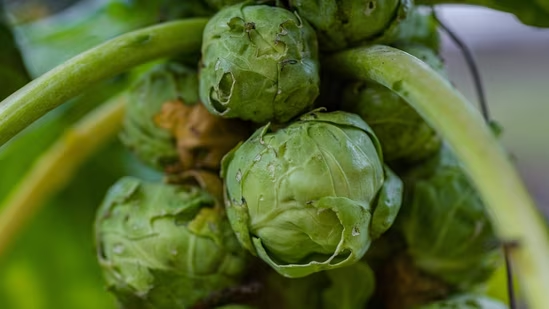
Brussels sprouts may not be everyone’s favourite vegetable, but as a cruciferous powerhouse, they’re packed with gut-friendly benefits. Each serving delivers nearly four grams of fibre that supports digestion and feeds healthy gut bacteria, while also supplying a range of anti-inflammatory compounds. That said, how you prepare Brussels sprouts can make a real difference – with the right cooking method helping your body absorb more nutrients and unlock their full health potential.
Also Read | UK surgeon explains why refried beans is the ‘wagyu beef of fibres’ and even better than whole beans
Dr Karan Rajan, a UK-based surgeon and popular health content creator, has shared a clear, step-by-step guide on how to cook Brussels sprouts in a way that maximises nutrient absorption, preserves beneficial enzymes, and makes their health-boosting compounds more bioavailable. In an Instagram video shared on January 28, the surgeon states, “If you’re eating Brussels sprouts, here’s how to prepare them to maximise nutrient absorption and bioavailability.”
Step 1: Cut and set aside
According to Dr Rajan, the first step is to cut the Brussels sprouts and then let them rest for about 10 minutes, as this allows the enzymes to activate the vegetable’s anti-inflammatory compounds before cooking or consumption.
The surgeon explains, “When you cut Brussels sprouts, you rupture the cell walls and activate an enzyme known as myrosinase. The enzyme helps to convert glucosinolates in the Brussels sprouts into sulforaphane, which is a potent anti-inflammatory compound. But this conversion takes time, so let them sit for 10 minutes before cooking.”
Step 2: Drizzle olive oil and roast
The next step is to roast the cut Brussels sprouts over moderate heat, drizzled with olive oil, which helps unlock their fat-soluble vitamins. Dr Rajan explains that gentle roasting breaks down the cell walls, making the nutrients easier for the body to absorb and more bioavailable.
The surgeon points out, “Roast at moderate heat and drizzle with olive oil before roasting, because Brussels sprouts have vitamin K, which is fat soluble – it needs fat to be absorbed. Roast at 400 fahrenheit or 200°C for 20 to 25 minutes. The moderate heat breaks down the cell walls, making the beta carotene it contains even more bioavailable. The heat also caramelises the natural sugars, thus helping to reduce that raw bitterness without sacrificing the prebiotic fibre that your gut bacteria love.”
Step 3: Add mustard seeds or garlic
The final step is to add mustard seeds or garlic to roasted Brussels sprouts. Dr Rajan notes that most people tend to skip this step, but it is crucial for keeping the enzymes active that regulate the vegetable’s anti-inflammatory sulphur compounds.
The surgeon notes, “Add mustard seeds or garlic. This is the secret step most people skip when you cook Brussels sprouts. The heat could deactivate the myrosinase enzyme, but mustard seeds also contain myrosinase enzymes which can be reintroduced and this can help to preserve the sulforaphane production. And garlic contains allicin and other sulfur compounds which can help to amplify the anti-inflammatory effects of the Brussels sprouts’ glucosinolate.”
Dr Rajan highlights that regardless of how you cook Brussels sprouts, they still provide nearly four grams of slow-fermenting fibre per serving, which is less likely to cause gas or bloating compared to other high-fibre foods. He notes, “Unlike fast fermenting fibres that can cause gas and bloating in the first part of your colon, the fibres from Brussels sprouts ferment gradually throughout your entire colon.”
Note to readers: This article is for informational purposes only and not a substitute for professional medical advice. It is based on user-generated content from social media. HT.com has not independently verified the claims and does not endorse them.