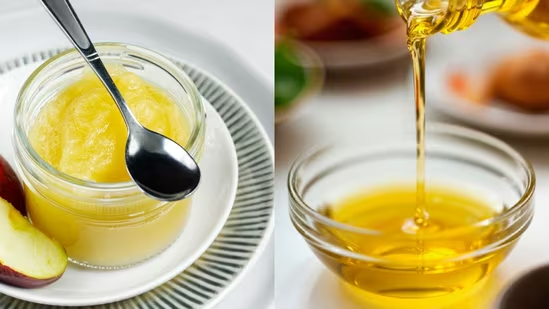
Are you one of those who mistake the myth that ‘ghee is fattening’ as fact? With an increasing number of people seeking food that is cleaner, healthier, and rooted in tradition, the use of traditional fats such as ghee and mustard oil is on the rise. Chef Anal Uniyal, who has two decades of experience across India’s luxury hospitality industry, says using these fats the right way in the kitchen helps to make the most of their health benefits.
Is ghee fattening?
“From a culinary and cultural standpoint, the theory that ghee and mustard oil are ‘fattening’ or unhealthy is an absolute myth. Ghee has been an integral part of our Ayurvedic nutrition for centuries and is a valuable source of omega-9 fatty acids when enjoyed in moderation. Mustard oil, traditionally used in many mountain and coastal regions, is naturally anti-inflammatory and heart-friendly,” Chef Anal Uniyal tells Health Shots in an interview.
The chef grew up in a mountainous region where mustard oil is used in almost every household. “People there live active lives and thrive on these traditional fats. Like any ingredient, it comes down to balance and proportion,” he adds.
Chef Uniyal is the Director of Culinary at Fairmont Jaipur, where the use of refined oil has been replaced with clarified butter (desi ghee) and mustard oil for Indian cuisine, and olive oil and canola oil for Western, Pan-Asian, and other global preparations.
Highlighting the taste profile, he says: “Mustard oil imparts a distinctive pungency and peppery sharpness, bringing vibrancy especially to fresh greens and rustic preparations. Ghee, with its rich, nutty aroma and warm depth, adds a luxurious roundness to dishes, something refined oils simply cannot replicate.”
Any tips for cooking with ghee and mustard oil?
“With mustard oil, it is very important to cut the extra pungent flavour. One can heat it until it approaches its smoke point, then bring it down to around 160–170°C before beginning your preparation,” explains the Chef.
As for ghee, he says, it works beautifully both as a cooking medium and as a finishing element. “Using a portion during cooking and adding the rest at the end allows the dish to retain its exquisite nutty aroma,” he explains.
How do these oils compare nutritionally with refined seed oils or olive oil when it comes to Indian cooking?
“Refined seed oils can have high content of trans fats during the production and reduce overall purity, making them more prone to inflammatory effects. Olive oil, while nutritionally beneficial, can disrupt the authentic flavour profile of Indian cuisine when used at high temperatures or in traditional preparations. Ghee and mustard oil, on the other hand, harmonise beautifully with Indian spices and techniques while delivering wholesome nutrition,” answers the Chef.
Smoke points of ghee and mustard oil
Ghee is clarified and devoid of milk solids. So, it naturally attains a high smoke point up to 250°C, allowing it to retain its signature aroma even at elevated temperatures. Mustard oil shows a similar heat resilience. “Both oils remain stable during tadka, frying, and slow roasting, ensuring the flavours stay true and the nutritional integrity of the dish is maintained throughout the cooking process,” says Chef Uniyal.
(Note to readers: This article is for informational purposes only and not a substitute for professional medical advice. Always seek the advice of your doctor with any questions about a medical condition.)