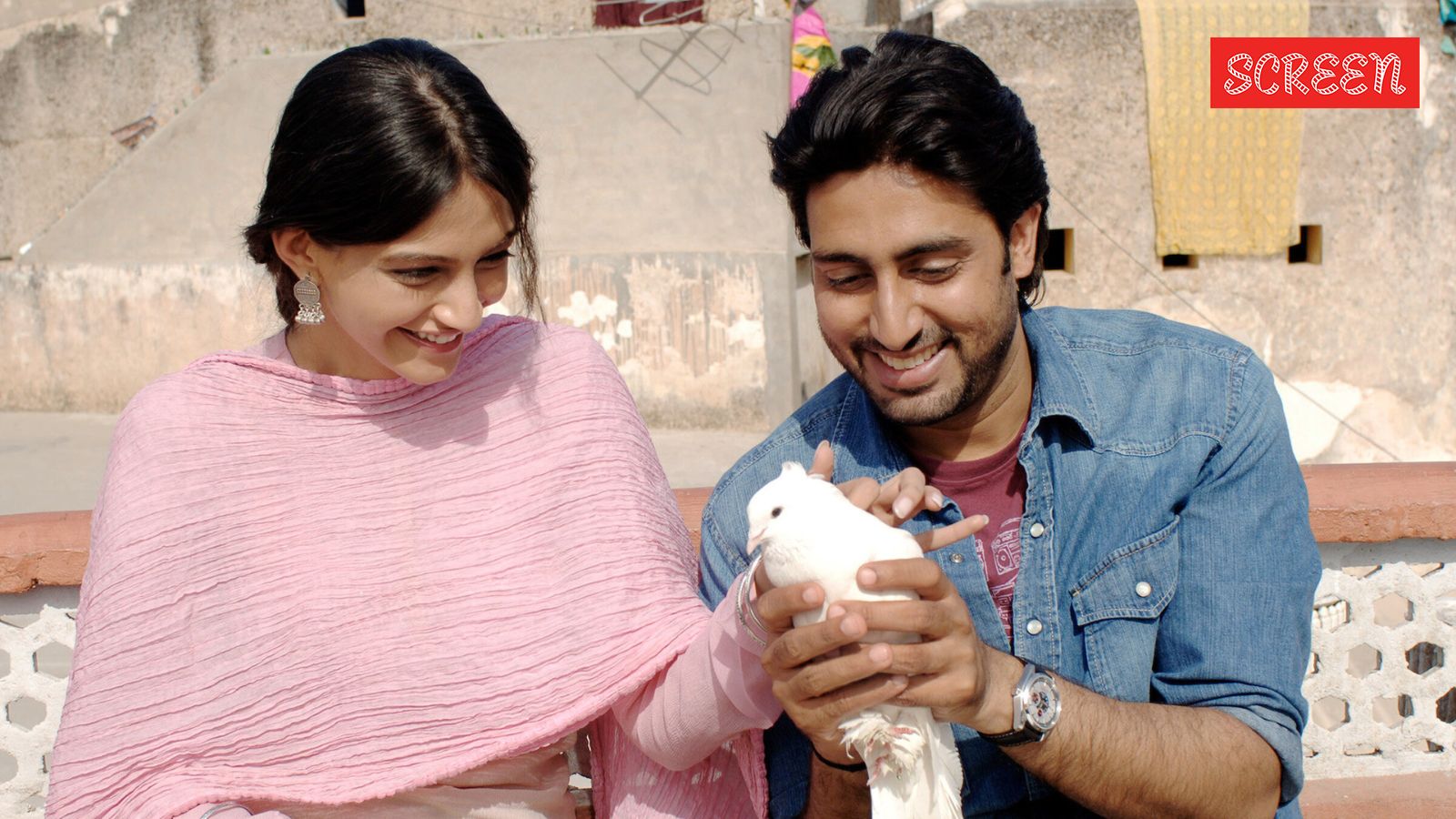
Rakeysh Omprakash Mehra’s Delhi 6 remains an intriguing work, as it was a piece of art that not only interrogates the cultural contours of India’s past but also hints towards the ethical and social trajectories that will influence its future. Yet, in an industry often governed by narrow commercial imperatives, such nuances often go unnoticed. When the film released in 2009, it was a box office failure. Over time, however, it has grown in stature, proving to be more incisive and relevant than many films of that decade. In an exclusive conversation with SCREEN, Mehra revealed that the country is still not ready for the film’s original version, which remains unreleased. This version, he says, opens with the death of the film’s protagonist, Abhishek Bachchan:
“The original film opens with the ashes immersion of Abhishek’s character in the Ganges. And over that, a voiceover comes, in Abhishek’s voice, saying, ‘These are my ashes.’ That’s how the story begins, and in the very opening frame you are told that your hero is dead.” Mehra continued: “That’s the original version. I still have it with me. That’s the one that went to the Venice Film Festival. They saw the film, they freaked out, they said ‘wow,’ and they gave it a lovely reception out there. And that’s why I call it the Venice cut, or the director’s cut. And Variety, the film magazine, gave it a front page, calling it ‘(un)Bollywood’.”
Also Read | Rishi Kapoor walked out of father Raj Kapoor’s film because he wanted to shoot at night, reveals Rakesh Om Prakash Mehra
On why he changed the ending for the Indian release, Mehra admitted: “Out of foolishness. Sheer foolishness. We filmmakers are foolish people, mad, foolish, all of that. I think there was so much dark humour in the film. There was so much going on that everybody who saw the cut said, ‘Leave it with some hope,’ and all that. And I fell for it. I shouldn’t have.”
Asked if he plans to release the original director’s cut someday, especially at a time when older classics are being re-released, Mehra remained uncertain: “I don’t know, I really don’t. If I were to re-release, I still feel the time isn’t right. I still feel the nation hasn’t evolved; in fact, we have gone down the hole in many ways. Of course, we have progressed in many ways as well, but I don’t know how to define that progress.” Another question that intrigues many was what prompted Mehra to make a film like Delhi-6 in the first place, after having done something like Rang De Basanti.
Mehra replied by saying that there was a silence that troubled him back then, a silence which had been accumulating around for ages, and that very silence compelled him to go on this journey. “My silence had to come through the film. And the fact that I was silent was the reflection of the entire nation being silent,” he explained. However, when the film released, it was heavily criticized by reviewers for several reasons, and eventually turned out to be a major box-office failure. Speaking about this, Mehra said:
“I felt the so-called critics went against me with a vengeance. They completely misinterpreted the film. A hit or a flop is another thing, that’s okay, it’s part and parcel of the business. I have seen the highs and lows of the box office, and one learns to accept it. But to have somebody’s work completely misinterpreted, and that is what is fed to the audience, taking away their own chance to decide, that’s another matter. Let them make their own mind, and they eventually did. It took them 20 years, but they did.”
Story continues below this ad
When asked what’s next for him, especially in a landscape like today’s where only certain kinds of films are getting greenlit, Mehra said he is dying to make a film on farmers. “See, whether people back it or not is not my problem. I will make the film I am dying to make. What I am feeling today is what I am going to make. I feel hugely about the farmers today, and I’m dying to make a film about them. The person who is feeding you is hanging himself, while the person making Coca-Cola is a billionaire. That’s a story to tell to underline today’s time.”
Click here to follow Screen Digital on YouTube and stay updated with the latest from the world of cinema.
© IE Online Media Services Pvt Ltd