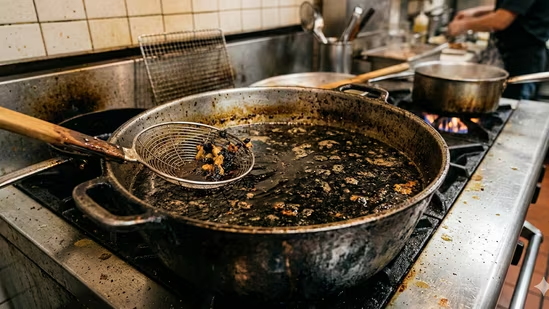
With inflation driving up the prices of everyday essentials – including cooking oil – it is understandable that many households try to stretch every drop. Saving leftover oil from deep-frying and reheating it later may seem like a practical, economical choice. After all, fast food chains appear to do it routinely. But how many times is too many times? And at what cost to your health? While the financial logic may make sense, experts warn that the health risks of repeatedly reheating oil – including an increased risk of cancer – are often overlooked in the process.
Also Read | Diabetologist with 24 years of experience shares 5 food mistakes that are silently increasing your heart attack risk
Dr Priyanka Sehrawat, a general physician and neurologist trained at AIIMS, New Delhi, and currently associated with The Neuromed Clinic in Gurugram, is unpacking the often-overlooked dangers of repeatedly reheating cooking oils. In an Instagram video shared on February 23, she explains how this common kitchen practice can quietly contribute to long-term health risks, from metabolic disruption to more serious conditions such as cardiovascular disease and cancer.
What happens when you reheat oil repeatedly?
According to Dr Sehrawat, repeatedly reheating cooking oil is a serious and often overlooked cancer risk. She cites a recent survey conducted at a fast food outlet in Jaipur, which found that the same batch of oil had been reheated multiple times until it had turned completely black – a clear sign of degradation. The neurologist explains that when oil used for deep-frying is reheated again and again, it breaks down and releases carcinogenic compounds and other harmful substances.
She explains, “Reheating oil repeatedly is a major risk factor for cancer. Recently, a survey at a McDonald’s in Jaipur revealed how many times the oil they were using had been reheated; it had turned completely black. When you reheat oil – no matter what kind of oil it is – after making deep-fried items and using it again for frying, heating it repeatedly releases carcinogenic compounds, total polar compounds, polycyclic aromatic hydrocarbons, trans fats, and free radicals.”
Health risks
The toxins released when oil is repeatedly reheated do not just elevate cancer risk – they can also have serious consequences for heart health. Regular consumption of food cooked in degraded oil has been linked to a higher risk of cardiovascular diseases, including heart attacks. Additionally, reheated oil contributes to a rise in LDL (bad) cholesterol levels in the blood, further increasing the likelihood of plaque build-up and long-term cardiac complications.
Dr Sehrawat highlights, “Because of these toxins, not only does the risk of cancer increase manifold, but these also significantly increase cardiovascular risk factors and the risk of a heart attack. The risk of your cholesterol increasing also rises many times over.”
What is the solution?
The neurologist cautions against repeatedly reusing cooking oil at home in the name of cutting costs, stressing that the long-term health risks far outweigh the short-term savings. Instead of subjecting the same oil to another round of deep-frying, she suggests a safer alternative: if you must reuse it, strain and store it properly, and use it within the next day or two for light cooking methods such as tempering. However, she strongly advises against reheating the oil again for deep-frying, as high temperatures further degrade its quality and significantly increase the formation of harmful compounds.
Dr Sehrawat explains, “Our guidelines suggest that if you want to be economical at home – since you cannot constantly throw oil away – if you have used it once for deep frying, you can use it for tempering (tadka) within the next two days, but do not use it for deep frying again.”
Note to readers: This article is for informational purposes only and not a substitute for professional medical advice. It is based on user-generated content from social media. HT.com has not independently verified the claims and does not endorse them.