Much of the chemical manipulation that trees practise on animals remains appropriate. The striking relationship between the cacao tree and monkeys, for example, appears to have been seamlessly transferred into humans and our love of chocolate, even though our genetic paths parted from the monkeys of South America 5 million years ago.
.
The debate still rages over the exact dates when humans first travelled to the continent of America, but new evidence suggests that they, like the cacao tree, were sheltering in small warmer patches of South America20,000 years ago. The cacao tree was the keystone species of many pre-Columbian South American cultures. Could it be that as the world warmed up cacao and humans expanded their range together? Was it simply that the seeds of that very early interdependence survived in our DNA, encoding a human protein (an adenosine receptor) that was chemically re-shaped by the rings and oxygens of theobromine?Or was it the reforming of an old relationship of compatibility and attraction: our eyes drawn to the red and yellow of the pods, their convenient positioning by the tree close to the trunk an invitation for us, like our monkey ancestors, to pick them and spread the seeds?
Certainly, the allure of cacao is hardwired into our nervous systems. At whatever stage the primate responsibility for dispersing Theobroma cacao transferred from monkeys to humans, it was firmly embedded by the time most pre-Columbian cultures developed.It was fundamental in Aztec society, where the tree was associated with the god Quetzalcoatl, who, much like Prometheus and fire in Greek myths, was damned by the other gods for sharing chocolate with humans.Meanwhile, the Mayan kings were chocolate connoisseurs; their beautiful cacao drinking bowls had glyphs that lingered lov-ingly on the properties of the cacao; foaming cacao, tree-fresh cacao. Europeans were equally susceptible, and the majority of cacao trees are now found growing in West Africa, part of a huge global trade. Cacao trees currently grow everywhere in the world they can sur-vive, from south-eastern Mexico to the Philippines, the Ivory Coast, Angola and India, and we plant them, nurse them and consistently destroy their competition and pathogens.
How many more examples of trees shaping human behaviour, domesticating or taming us, are there? The soothing scent of a new book is a response to the smell of lignin in the paper, specifically a subunit, vanillin, that is also released into some whiskies aged in oak, and concentrated by the vanilla orchid – which grows on trees. Unlike most orchids, which have seed dispersed by the wind, both bees and animals disperse vanilla orchid seed – one reason for its extremely wide distribution. This means that the smell of both cupcakes and books can be traced back to the appeal of our woody nests.
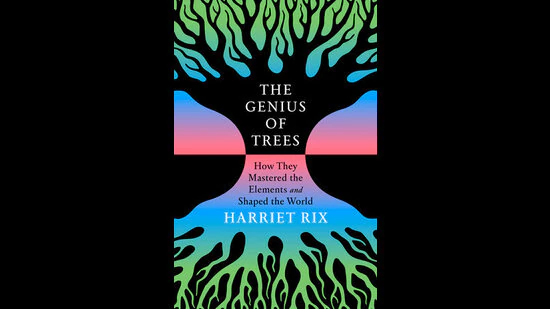
(Excerpted with permission from The Genius of Trees: How They Mastered the Elements and Shaped the World by Harriet Rix, published by Vintage Digital; 2025)
Lifestyle -Darshana Tiwari Published: Wednesday, January 14, 2026, 0:00 [IST] Pisces Horoscope Today January 14, Wednesday: Hey Pisces! Today, your emotions are on point, and […]
Sagittarius Horoscope for Today February 03, 2026, Tuesday: Explore your day with our daily Astrology predictions Subscribe Notify of new follow-up comments new replies to […]