If you find yourself constantly reaching for snacks despite not feeling truly hungry, you’re not alone. Mindless munching – driven by boredom, stress, or habit – can quietly add unnecessary calories over the day. While willpower alone rarely works, simple, science-backed hacks can help interrupt this cycle and give your brain a pause before you snack out of reflex rather than need.
Also Read | What is ‘food noise’? UK surgeon explains why people with obesity are more reactive to food; shares 5 ways to curb it
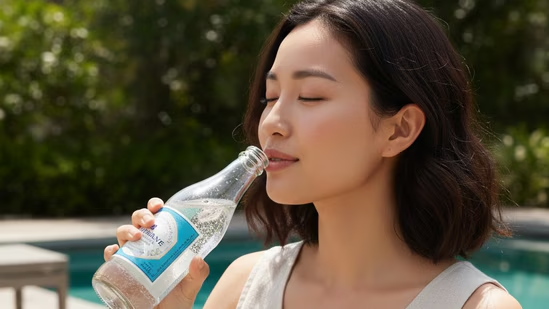
Dr Karan Rajan, a UK-based surgeon and popular health content creator, has shared a simple yet effective hack to curb boredom-driven hunger – those moments when you feel the urge to snack without genuine physical hunger. In an Instagram video shared on February 9, the surgeon explains how the simple act of drinking sparkling water can act as a useful tool to curb mindless snacking by helping regulate appetite and hunger signals.
Can sparkling water help?
According to Dr Rajan, much of what we perceive as hunger isn’t true hunger at all, but is often driven by boredom, stress, or the brain’s need for stimulation. He explains that appetite is centrally regulated and influenced by several physiological signals – including inputs from the gut, the vagus nerve, and stomach stretch receptors. In other words, the urge to snack isn’t just psychological; it has a strong biological component too. This is where sparkling water can help, by stimulating these pathways and potentially reducing the urge to eat mindlessly.
He highlights, “Have you ever noticed that a lot of your hunger isn’t actual hunger, but boredom, stress, or your brain looking for stimulation? This is something I’ve noticed in myself. And weirdly enough, something as simple as sparkling water helps with that. Not just psychologically, but physiologically. Your appetite is centrally coordinated. Your hypothalamus integrates signals from the gut, the vagus nerve, stretch receptors in the stomach and gut hormones.”
The physiological mechanism of the hack
Gastric distention
The surgeon explains that when you drink sparkling water, the carbonation adds volume and gently stretches the stomach, triggering signals to the brain that promote a sense of fullness and help curb further calorie intake.
Dr Rajan elaborates, “When you drink sparkling water, the CO2 and carbonation increases gastric distension. Your stomach physically stretches and this activates mechanoreceptors in the stomach wall, and these send signals via the vagus nerve to the hypothalamus and brain stem. The message is that volume is detected and energy intake can pause. And in early appetite regulation, volume influences satiety more than calories.”
Appetite hormones
The surgeon adds that drinking sparkling water, which gently stretches the stomach walls, can help suppress the primary hunger hormone, ghrelin, while stimulating satiety hormones such as GLP-1 and PYY. Together, these hormonal shifts may reduce appetite and help quiet food-related “noise.”
He explains, “That stretch also suppresses ghrelin, your primary hunger hormone. It also triggers the release of satiety hormones from enteroendocrine cells lining the intestine like GLP-1 and PYY. These continue to slow gastric emptying and reduce appetite drive. And this is not just a placebo effect. It is a neuroendocrine appetite regulation. And boredom isn’t just energy deficiency. It can be considered low-grade appetite noise. The carbonation can also mildly stimulate gastric motility, helping the stomach feel full and active instead of empty.”
Not a direct weight loss hack
However, Dr Rajan clarifies that sparkling water does not directly lead to fat loss, as calories still matter. Instead, it can act as a helpful tool to suppress appetite, making it easier to make more mindful and healthier food choices.
He highlights, “This is not fat loss, and it doesn’t override calories. Think of sparkling water as buying your brain time to make a rational choice, so the urge to eat can pass before it becomes a behaviour.”
Note to readers: This article is for informational purposes only and not a substitute for professional medical advice. It is based on user-generated content from social media. HT.com has not independently verified the claims and does not endorse them.